“My baby has a rash! What now?”. There has been a lot of hype worldwide, lately, regarding measles, and rightly so. It is important to emphasise that not all rashes are related to a measles infection. Having said this I want to stress emphatically that measles is “Not just a rash”.
The purpose of this blog is to explain the difference between the common childhood illnesses that cause rashes and what we as their caregivers can do to protect our children.
1. Roseola
- Roseola is a viral infection that usually affects children under the age of two. It is very rarely seen in adults since most people develop immunity to the virus early in life.
- People sometimes refer to Roseola as baby measles. Roseola isn’t measles at all. It is caused by a completely different virus. The only thing that Roseola and Measles have in common is the fact that they cause a rash and high fever.
- Roseola is usually caused by human herpesvirus 6 (HHV-6).
- Roseola can be a cause of great anxiety to parents since it typically starts with extremely high fevers and nothing else to find.
- Medical practitioners may test for urinary tract infections, do a lumbar puncture and go to great lengths to rule out other causes of the fever.
- The high fever persists for 3 to 4 days
- The child may be extremely irritable and may develop lymph nodes in the neck
- The fever ends abruptly and is followed by a rash.
- Once the rash comes out the child will feel a lot better. You do not need to put any creams on the rash.
- The rash usually starts on the trunk then spreads to the arms, legs and face
- The spots are usually pinkish which turn white when pressed.
- Spots may have a lighter halo and may last for a day or two after the initial 3 to 4 days of fever.
- Since this is a viral illness, there is no treatment other than fever control.
- Please use paracetamol or ibuprofen to control the fever and pain.
- Please DO NOT use aspirin. Aspirin can lead to a very serious condition known as Reye’s syndrome. Reye’s syndrome may damage a child’s brain and liver.

2. Coxsackie Virus
- This viral infection is often referred to as “Hand, foot and mouth”.
- The rash/ blisters appear first under the feet, on the palms of the hands or in and around the mouth. This is where the name comes from.
- The rash then spreads to the rest of the body.
- While it is considered a mild illness, in my experience it causes a lot of discomfort. The little children find it difficult to walk because their feet are so affected. Fingers blister and eating is extremely painful.
- A child with coxsackie may also develop a sore throat and joint pain.
- Again, fever and pain control are really the only options for treatment while the child develops immunity.
- In rare cases we may need to admit the child for intravenous fluids if eating and drinking proves too difficult.
- The illness generally lasts 7 to 10 days, with day 3 to seven being the worst.
- I always urge parents to watch their children closely during a coxsackie infection. If at any stage you feel that the child is just too unwell to manage on your own, please get medical advice. In severe cases, Coxsackie can lead to viral meningitis.
- Coxsackie is caused by the enterovirus

3. Herpes Stomatitis
- None of these viral illnesses are easy for children but Herpes Stomatitis hit my own child very hard and it was certainly difficult to manage.
- This virus causes severe blisters on a child’s tongue, gums, throat and the inside of the lips.
- It usually affects children between the ages of 6 months and 5 years.
- If you have ever had a fever blister, you know how painful it is. This virus fills a child’s mouth with the same blisters, making eating and drinking extremely difficult.
- Patients usually present to my practice with a fever, bad breath and refusal to eat or drink.
- The rash appears like small, fluid filled blisters which bleed easily. The blisters look yellow after they burst and develop a red halo. Bleeding vesicles (blisters) can develop a black crust.
- These symptoms range from mild discomfort to a debilitating illness requiring hospitalization for dehydration.
- Recovery usually occurs over two weeks
- The Herpes simplex virus is the culprit here.
- Since it is viral, we don’t have many treatment options. In severe cases, your doctor may opt for an anti-viral agent and strong pain medication.
- Getting your child assessed early on will determine if anti-viral agents can be used or not. Once the illness is established, the anti-viral agents may not be of any use.
- If your child becomes lethargic, extremely drowsy or shows changes in behaviour it could indicate that the virus has led to an encephalitis. This needs urgent medical attention.

4. Chicken-pox
- I am so grateful to say that this is one of the viruses that we do have a vaccination for.
- The chicken-pox vaccine is typically given in two doses. The first dose is recommended for a baby between the ages of 12 to 15 months. The second dose may be given between 4 years and 6 years of age.
- I often hear grandparents say that “in my day, if one child in the neighbourhood got chicken-pox, we were all made to play together so everyone went down with the illness together”
- That’s great for a child that gets a little fever and a couple of spots but trust me, these incidences are few and far between.
- Chicken-pox usually starts with small, red bumps on the face, chest and back. They are very itchy so they may be confused with an insect bite until the bumps fill with fluid and spread to the rest of the body.
- The blisters are particularly painful when they appear in the mouth and genitals. My own sister-in-law recalls the blisters going down her throat making drinking and eating very difficult. She got the blisters in her eyes and eventually her finger nails fell off. This is definitely not something I would want any child to suffer.
- Not only will your child have blisters but will also suffer flu-like symptoms such as fever, headache, sore throat, and extreme tiredness
- The blisters do eventually break open and weep, leaving open sores. These open sores are susceptible to infection especially when a child is scratching.
- These sores then crust over and become scabs. In most cases, the scabs will leave scars on the skin.
- The illness lasts for up to 10 days if no complications set in.
- Complications of chicken-pox are not common but a child may get a bacterial infection of the skin and soft tissue. This is usually because infection gets in when the skin breaks down. Pneumonia, encephalitis and sepsis can also occur.
- Chicken-pox is extremely dangerous during pregnancy so it is advisable that your toddler is vaccinated before you decide on growing your family.
- Chicken-pox is preventable with a vaccine. Even if a vaccinated child does get the illness, the symptoms will be mild.
- In some instances, your doctor may prescribe anti-viral agents and something for the itching. Hopefully, this will discourage scratching and those nasty secondary infections.

5. Rubella (German Measles)
- This is yet another viral infection that causes a rash.
- It is caused by the RuV virus
- Another name for this virus is “German measles”
- While Rubella generally affects an individual for roughly three days, it has dire consequences for a newborn or pregnant woman
- The rash typically starts on the face and moves down the body.
- Prior to the rash appearing, your child may develop flu like symptoms including a low-grade fever, headache, a cough, swollen glands and a mild pink-eye. This may occur 1 to 5 days before you notice a rash.
- Our greatest concern is for the unborn child. If a woman is exposed to rubella during her pregnancy, she is at risk for a miscarriage or stillbirth. Should the foetus survive, it is still at risk for severe birth defects with lifelong consequences.
- Fortunately, this is a vaccine preventable disease. The MMR vaccine protects against Measles, Mumps and Rubella.

6. Measles
Last but certainly not least, the measles virus. I don’t think that there is a parent on this earth who would tell you that measles is just another rash. After watching your child suffer the terrible effects of the illness you will be the first to say “it is truly a dreadful illness”.
- As of March 27 2025, America has a confirmed 483 measles cases and two deaths.
- Just so we can all get our heads around this. Before the advent of the measles vaccination in 1963, there were roughly 3 to 4 million cases of measles in the USA annually. With vigorous vaccination programs, measles was declared eliminated in 2000. And then…
- In our own country, South Africa, measles was also at the brink of being declared eliminated. There was a dramatic turn around when the Wakefield research was released. Despite the fact that he was utterly discredited, the world went back to the very real threat of this dreadful illness.
- Measles (Rubeola) is a highly contagious, vaccine preventable disease.
- It is an acute viral respiratory disease.
- It usually begins with fevers in excess of 40°
- This is followed by a cough, exhaustion, runny nose and conjunctivitis.
- The rash then makes its entrance.
- It is highly contagious and spreads easily when an infected person coughs or sneezes.
- Measles can cause many different kinds of complications, including ear infections, pneumonia and encephalitis.
- The scary thing about measles is that it weakens the immune system, making the individual vulnerable to many other infections.
- While most people will recover after a lengthy audial, complications can be severe and lead to death, especially in children.
- Children are most vulnerable to this virus. If the illness progresses, there is a risk of Encephalitis. This causes inflammation to the brain resulting in seizures.
- The virus also affects the eyes. Most children experience photophobia but the virus may damage the eyes and lead to blindness.
- In its worst form, measles leads to a condition known as Subacute Sclerosing Panencephalitis (SSPE). This is a rare but potentially fatal, neurological disorder that may only rear its ugly head years after the initial measles infection. At best, these children will suffer significant neurological damage.
- This horrific complication is making a comeback. In a report published in February 2025, it is concluded that there has been a surge in the number of cases with SSPE in developing countries. This has been attributed to misinformation and a decline in immunisation.
- Measles is not a rash; it is a medical emergency.
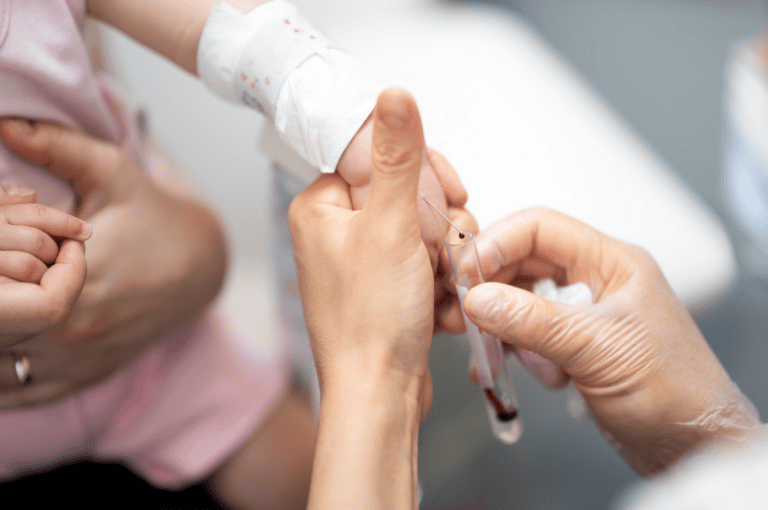
- If your doctor suspects that your child has measles, there are strict protocols in place. Measles is a notifiable disease and has to be reported to the NICD. A form has to be completed and submitted to the NICD. A blood sample or throat swab needs to be sent to the NICD for testing. There is no cost to the patient but it is really important to curb an outbreak. A diagnosis of measles cannot be taken lightly so before a healthcare provider suggests the rash IS measles, a blood test or throat swab must be taken and tested at a laboratory to confirm the diagnosis.
- If such protocols are not followed then we are either placing many people in danger or the rash is not measles.
- The good news is that we can prevent the spread of the disease through an effective vaccination program.

Conclusion
A rash can be a simple viral infection but in other cases it has the potential to cause severe damage. We all know that children get ill especially in the first couple of years of life. They are building immunity to the vast world of viruses. While this is a natural process, much like scraping a knee or getting stung by a bee, there are certainly some important considerations.
If you have a child that is ill with a virus, please isolate them from other children and pregnant woman.
If there is a vaccine preventable disease, I would highly recommend that you ensure that your child receives the vaccination. Not only will you be protecting your child but you will be adding to the general herd immunity that our society requires right now.